For some people, pouring a non-alcoholic drink into a proper glass makes an evening feel more like an evening. For others, the glass is beside the point: what they miss is the taste, the effect of alcohol, or the way a drink marks the end of work. There isn’t one right answer, and a nice glass isn’t a magic fix.
But it can help to look beyond the drink itself. Ask: what job is this habit doing? If the glass, the pour and the first sip are part of how you change gears at the end of the day, a non-alcoholic option may be a useful way to keep some of that ritual. If the main thing you want is alcohol’s effects, a substitute drink may not meet that need on its own.
This distinction matters especially for remote and hybrid workers, whose “commute home” may be a few steps from a laptop to the sofa. A deliberate evening cue can help create a boundary—but it works best when it suits your senses, your circumstances and the reason you reach for a drink.
Drink replacement or ritual replacement?
A drink replacement is about what is in the glass: a similar flavour, fizz, bitterness, temperature or satisfying pour. A ritual replacement is about the sequence around it: closing the laptop, choosing a glass, adding ice, pouring, sitting down and taking a first sip.
These can overlap, but they are not identical. You might enjoy a sophisticated alcohol-free drink and still miss the warmth or loosening effect of alcohol. Or you might find that an ordinary sparkling water feels more satisfying when you pour it into a glass you like and pair it with a clear end-of-work routine.
That second approach is a form of sensory ritual replacement. It doesn’t pretend that a non-alcoholic drink is the same as alcohol. Instead, it deliberately preserves some sensory and situational cues that make an evening drink appealing. The glass matters because it changes how the drink looks, feels in your hand and fits into the moment. Taste matters too. If you dislike the flavour, no amount of ceremony will make it a good fit.
The four jobs an evening drink might be doing
There is no official, universal list of reasons people drink in the evening. In coaching, it’s useful to think in terms of four common “jobs”. A single drink can do more than one of them at once.
The job What it might provide A question to ask Transition A signal that work or responsibilities are finished What would make the end of the workday feel visible? Decompression A pause, a change of pace or some distance from a demanding day What kind of break would feel restorative rather than numbing? Reward A small pleasure after effort, stress or a long list of tasks What treat feels enjoyable without creating another problem? Sensory or social experience Taste, ritual, something to hold, or a shared moment with others Which parts of the experience do I want to keep?1. Transition: “work is done”
For remote workers, work can spill into the evening because the physical cues of leaving an office are missing. A drink may become the marker that the workday is over. A non-alcoholic drink in a glass can help preserve that marker, but it may work better when paired with a concrete action: close the laptop, put it away, change out of work clothes or step outside for five minutes.
2. Decompression: “I need to come down a bit”
Sometimes the appeal is a pause after a high-pressure day. A replacement drink may provide a brief moment to stop, but it can’t remove the underlying workload, conflict or fatigue. Consider what kind of decompression you actually want: quiet, movement, food, company, a shower, or a few minutes without notifications. “Just relax” is not a plan. A specific first step is more useful.
3. Reward: “I’ve earned something”
There is nothing wrong with wanting a treat. The useful question is whether the treat feels good both now and later. A favourite alcohol-free mixer, a carefully made hot drink or a snack you genuinely enjoy may offer pleasure without trying to imitate alcohol’s effects. The point is not to be virtuous; it is to choose a reward that suits you.

4. Sensory or social experience: “I like the drink and the moment”
Here, the details can be the whole point: the weight of a glass, the sound of ice, a citrus smell, bitterness, bubbles or having something in your hand while chatting. These are real cues, not fussy extras. If the usual drink is part of social time, choosing a glass and drink you like can make an alternative feel less like a consolation prize.
Why a proper glass can make a difference
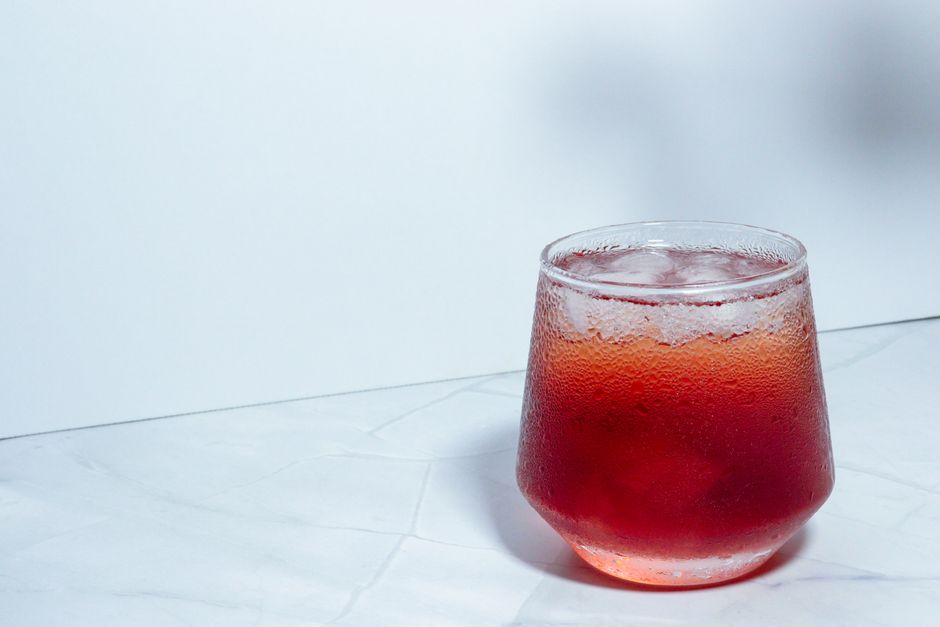
We respond to context as well as ingredients. The same liquid may feel different in a can, a mug or a favourite tumbler. A glass can make a pour feel deliberate, slow down the moment and offer familiar visual and tactile cues. For some people, that’s enough to make an alcohol-free choice feel satisfying.
It may also help separate “I want the ritual” from “I want alcohol”. Try noticing which part you anticipate: opening the bottle, the first taste, the physical effect, or the feeling of being off duty. That observation is not a test you can pass or fail. It is information you can use to shape a routine that fits the need.
There are limits. A proper glass won’t necessarily reduce cravings, resolve stress or replace alcohol’s pharmacological effects. If a non-alcoholic drink leaves you wanting more, that doesn’t mean you’ve done the ritual wrong. It may mean the drink isn’t the right substitute, or that the habit is meeting a need that deserves attention in its own right.
Create a workday-to-evening transition
Remote work can blur boundaries: the laptop is still open, messages keep arriving, and the next task is only a click away. Rather than relying on a drink to signal the end, build a short sequence that gives your brain more than one cue. Keep it easy enough to repeat on a tired Tuesday.
Choose a finish line. Pick a time or a clear stopping point, such as sending the final email or writing tomorrow’s first task. Close the work loop. Save your work, close the relevant tabs and write down anything you’re carrying into tomorrow. Change the scene. Put the laptop away, move to another room or take a brief walk around the block. Make the drink intentionally. Choose a glass, add the ingredients you enjoy and notice the temperature, smell and first sip. Pair it with something restorative. Eat, stretch, cook, call someone or sit outside—whatever fits the job you identified.The key is the first step. “Have a better evening” is vague. “At 5.45, close my laptop and pour sparkling water with lime into the tumbler I like” is observable and https://thecoachspace.com/p/cbd-alcohol-free-evening/ doable. You can make the routine shorter on busy days, but keep the opening action clear.
Run a one-week experiment
Instead of deciding whether this approach “works” in theory, test it. Keep a notebook for a one-week experiment. You don’t need to track every detail or judge the result. A few brief notes can show whether the routine is helping.
- Before: What am I looking for tonight—transition, decompression, reward or sensory enjoyment? During: Which cues make the drink satisfying: glass, temperature, flavour, fizz, smell or setting? After: Did the routine help me shift into the evening? What, if anything, was still missing?
Try a few variations if you like: the same drink in different glasses, a different alcohol-free flavour, or the same glass paired with a walk or a shower. Change one thing at a time so you can tell what made a difference. If you find that a replacement drink simply keeps the alcohol habit front of mind, you can try a different evening cue instead.
Where supplements fit—and where they don’t
Some people explore products such as CBD as part of an evening routine. Joy Organics, for example, offers CBD Sleep Gummies (Joy Organics). Mentioning a product is not a recommendation or a promise that it will help you sleep, reduce stress or replace alcohol. Evidence, product quality, individual response and the rules that apply where you live all matter.
If you’re considering a CBD product, check the label carefully and look for accessible product information, including QR code lab results where available. A QR code is a route to information, not proof by itself that a product is suitable for you. Check what the results cover, whether they relate to the product and batch you’re buying, and whether the information is clear.
It’s sensible to seek pharmacist advice before using CBD, particularly if you take medicines, have a health condition, are pregnant or breastfeeding, or are unsure about interactions. Don’t use a supplement as a substitute for medical advice, and avoid relying on marketing claims or assuming that “natural” means risk-free.
When a routine isn’t enough
If you’re concerned about your drinking, finding it hard to cut down, or using alcohol to cope with feelings that are becoming difficult to manage, you deserve support without shame. A non-alcoholic drink can be one small part of a change; it does not need to carry the whole weight of it. You could speak with your GP or contact a relevant alcohol support service in the UK.
Coaching can also help you examine habits, identify what they are doing for you and design practical alternatives. The Coach Space directory lets you Find a coach - free consultation. A coaching conversation is not a replacement for clinical or addiction support, but it may be a useful way to explore routines and accountability.
So, does it actually help?
A non-alcoholic drink in a glass can help when what you want is partly the ritual: the pour, the taste, the pause or the signal that work has ended. It is less likely to feel satisfying if you expect it to reproduce alcohol’s effects or solve the reason you’re reaching for a drink.
Start by asking what job your evening drink is doing. Then choose a replacement for that job, not just a liquid that looks similar. If sensory cues matter, make room for them. If the missing piece is a work-to-evening boundary, add a clear finish-line action. Keep the first step small, try it for a week, and notice what genuinely helps. That is a more useful test than whether the glass looks impressive.